20 RECOMMENDED IDEAS FOR DECIDING ON THE SCEYE PLATFORM20 RECOMMENDED IDEAS FOR DECIDING ON THE SCEYE PLATFORM
How Do Sceye's Stratospheric Airships Keep Track Of Greenhouse Gases
1. The Monitoring Gap is Much Larger That Most People Are Acquainted With
Emissions of greenhouse gases from the global atmosphere are monitored through a myriad of ground stations, occasionally plane flights, and satellites operating for hundreds of kilometres over the Earth's surface. Each has their own set of limitations. Ground stations are sparse and geographically biased towards wealthier nations. Aircraft operations are costly with a short duration and are limited in coverage. Satellites give global coverage but have difficulty with the resolution needed to determine specific emissions sources- pipes that leak, landfill venting methane or an industrial facility not reporting its output. The result is an monitoring system that has serious blind spots at exactly the level where accountability and intervention are the most crucial. Stratospheric platforms are increasingly being considered to be the unreachable middle layer.
2. Altitude Creates a Monitoring Advantage Satellites can't duplicate
There's a mathematical argument why 20 kilometres outweighs 500 km for monitoring of emissions. Sensors operating from stratospheric altitude can observe a ground footprint of up to a hundred kilometres in proximity enough to identify emission sources with significant precision — single facilities and road corridors as well as agricultural zones, and so on. Satellites observing the same region from the low Earth orbits cover it much faster however with a smaller granularity and revisit times. This means a methane gas plume that emerges and disperses over a period of time may not be captured. An instrument that keeps its location over an area of interest for a period of days or weeks at a time, transforms intermittent snapshots into continuous surveillance.
3. Methane is the main target for a valid reason
Carbon dioxide is the one that gets most of the public attention however methane is the greenhouse gas with which the improvements in monitoring over the next few years could make the biggest difference. Methane is far more potent than CO2 for a time period of 20 years and a large portion of methane emissions anthropogenic originate from point sources — infrastructures for oil and gaz as well as waste facilities and farming operations, etc. These are both detectable and often repairable once they've been discovered. Methane monitoring that is real-time and from a persistent stratospheric platform means the operators, regulators and authorities can detect leaks before they occur rather then identifying them in the months following annual inventory reconciliations, which are typically based on estimates, not measurements.
4. The Airship Design of Sceye is Built for the Monitoring Mission
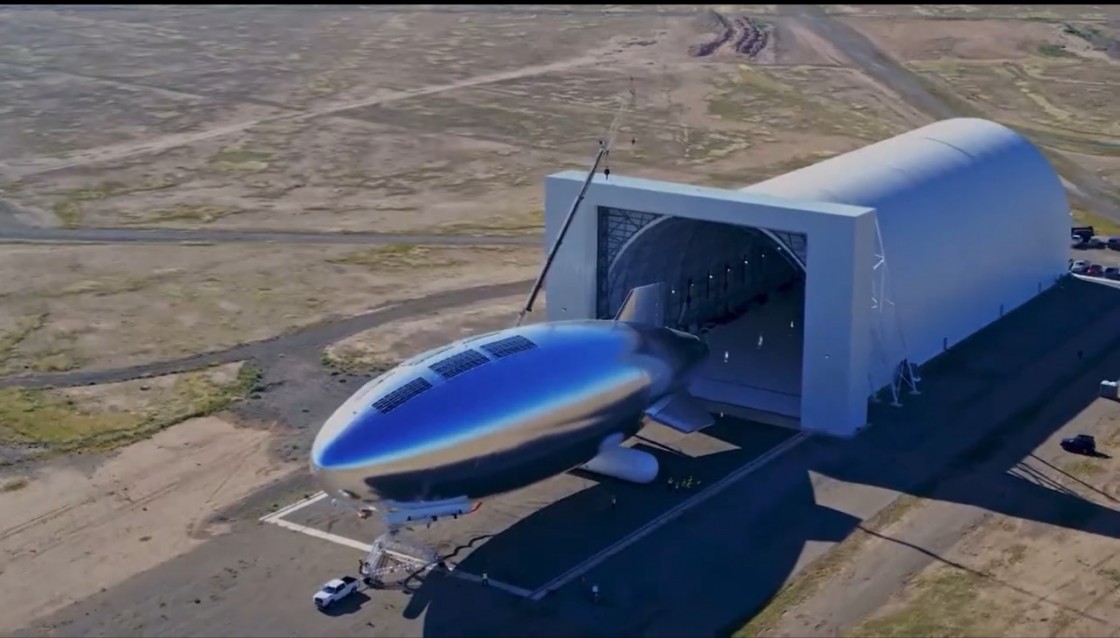
What makes an excellent telecommunications platform as well as an effective environmental monitoring platform intersect more frequently than you expect. Both require endurance for a long time in stable positioning and sufficient payload capacity. Sceye's lighter-than air airship solution covers all three. Since buoyancy takes care of the basic task of staying aloft the energy budget of the airship doesn't go to generating lift — it's available for propulsion, station keeping and powering whatever sensors suite the mission requires. To monitor greenhouse gas emissions in particular this means carrying imaging systems, spectrometers, and data processing tools without the extreme weight constraints that restrict fixed-wing HAPS designs.
5. Station Keeping Is Non-Negotiable for Useful Environmental Data
A monitoring platform that is prone to drift is a monitoring system that creates data that's hard to comprehend. Knowing precisely where a sensor was at the time it recorded a reading is vital to attribute that reading to the source. Sceye's emphasis on true station keeping — which is holding the position of a fixed point above a specific area by means of active propulsion it's not just one of the metrics used to measure performance. It's why the data is scientifically valid. Stratospheric earth observation is really useful for regulatory or legal reasons if the positional record is solid enough to stand up to scrutiny. Drifting balloon platforms regardless of how skilled their sensors are, cannot give that.
6. A Single Platform is able to Monitor Oil Pollution and Wildfire Risks ad-hoc
One of the more compelling aspects of the multi-payload model is the fact that naturally, different environmental monitoring missions work together within the very same car. Airships that operate over coastal or offshore regions can be equipped with sensors that are calibrated for monitoring oil pollution as well as that monitor CO2 or methane. On land, the same platform architecture allows for wildfire detection technology — identifying smoke plumes, heat signatures, and vegetation stress indicators which can precede ignition incidents. Sceye's method of mission design makes these not distinct programs that require separate aircrafts instead as a set of parallel uses for infrastructure that's already positioned and operational.
7. The ability to detect Climate Disasters in real time changes the Response Equation
There's a difference in knowing that a forest fire began just six hours ago and knowing that it started just 20 minutes in the past. The same holds true for industrial accidents releasing toxic gases, flooding events threatening infrastructure, or sudden methane releases from permafrost. The ability to detect climate disasters at a moment's timing from a recurrent stratospheric monitoring platform offers emergency managers governments, agencies, and industrial operators the opportunity to intervene which doesn't be present when monitoring relies on orbital revisit cycles, satellites, or ground-based reports. The value of that window increases when you realize that the early phases in most environmental emergencies an area where intervention is the most efficient.
8. The Energy Architecture Makes Long Endurance Monitoring a Viable
Environmental monitoring missions will only bring their true value if a platform remains in the station for a in a sufficient amount of time to make an important data record. The methane level for a week in an oil field will tell you something. Continuous data for months will show an actionable thing. The ability to sustain that endurance is dependent on solving the problem of power consumption during the nightThe platform must be able to retain enough power through daytime to allow for all systems during the evening without affecting their position or sensor operation. Modern advances in lithium sulfur battery chemistry with energy density around 425 Wh/kg. These, in conjunction with an improvement in solar cell efficiency create a closed power loop practicable. But without these two, endurance is an aspiration, not a definition.
9. Mikkel Vestergaard's Backstory Explains the Environmental Emphasis
It's important to comprehend why a stratospheric company in aerospace places such a the emphasis it does on greenhouse gas monitoring and detection of disasters rather than solely focusing on connectivity revenue. Mikkel Vestergaard's record of applying technology to huge-scale environmental and humanitarian challenges gives Sceye an underlying philosophy that influences the tasks that the company puts on its agenda and how it describes its platform's goal. The environmental monitoring capabilities aren't a secondary payload bolted on to make the appearance of a telecoms device more socially responsible. They convey a profound belief that the stratospheric system should be engaged in climate action, and that the same platform will do both without compromising either.
10. It is important to understand that the Data Pipeline Is as Important as the Sensor
Collecting greenhouse gas readings from the stratosphere's surface is only part of the problem. Getting the information to people who need it, in a form that they can decide on, and in a format that is close to real time is the second part. A stratospheric technology with onboard processing capability as well as direct downlink to ground stations is able to reduce the gap between detecting and making a decision significantly as compared to systems which batch data to be later analyzed. For applications that manage natural resources, regulatory compliance monitoring, or emergency response, the timeliness of the data usually matters more than its accuracy. Integrating the data pipeline into an architecture of the platform from the beginning, rather than putting it off as an afterthought is what is differentiating serious stratospheric Earth observation from experimental sensor campaigns. Check out the best sceye for site examples including Sceye News, sceye careers, sceye aerospace, Wildfire detection technology, Real-time methane monitoring, marawid, sceye careers, sceye haps airship status 2025 2026 softbank, sceye haps project status, what does haps and more.

SoftBank'S Haps Pre-Commercial Services What Can We Expect In 2026?
1. Pre-Commercials are a particular and significant Milestone
The use of terms is crucial in this. Pre-commercial services comprise an exclusive phase in the development of any brand new communications infrastructure — beyond experimental demonstration, past proof-of-concept flight campaigns, and into the domain where real users get actual service under conditions which provide a rough idea of what commercial deployment might be. It indicates that the platform is capable of station-keeping with reliability, the signal is meeting quality specifications that the actual application relies on and the ground infrastructure interfaces with the spheric radio antenna correctly, and the regulatory approvals are in place to provide service to areas that are densely populated. This is not an achievement in marketing. This is a functional one with the knowledge that SoftBank has announced its intention to getting it within Japan in 2026, sets the bar for what the engineering on both sides of this partnership has to set.
2. Japan is the perfect country to Try This First
It is clear that choosing Japan as a location for stratospheric pre-commercial services isn't arbitrary. Japan has a collection of traits that make it close to perfect as a possible first deployment environment. Its terrain — mountainous terrain, thousands of inhabited islands in the ocean, and long and complex coastlines — poses real problems in coverage that the stratospheric network is designed to tackle. The regulatory environment it operates in is sophisticated enough to handle the spectrum and airspace challenges that stratospheric processes raise. The existing mobile network infrastructure, which is operated by SoftBank can provide the integration layer that an HAPS platform will need to connect to. Its population also has an ecosystem for devices as well as digital literacy required to access stratospheric broadband services without requiring an extended period of adoption that would delay meaningful uptake.
3. Expect Initial Coverage to Focus On Underserved Areas and Strategically Important Areas
Pre-commercial deployments don't attempt to completely cover the entire nation at once. It is more likely to be an individualized rollout that targets areas where the gaps between current coverage and the level of connectivity that stratospheric can offer is the biggest and where the need for prioritizing coverage is most compelling. For Japan, this is a reference to islands that are currently dependent on costly and insufficient Satellite connectivity. Also consider mountainous regions where terrestrial networks' economics never provided adequate infrastructure or coastal regions where disaster resilience is a national priority given the country's seismic and typhoon exposure. These zones offer both the most evident evidence of stratospheric connectivity's importance and provide the most valuable operational data that can be used to improve coverage, capacity, as well as managing platforms before rolling out to more people.
4. Its HIBS Standard Is What Makes Device Compatibility Possible
One of the main questions people could reasonably ask about stratospheric connectivity is whether it requires special receivers or operates with standard devices. There is a solution. The HIBS Framework is High-Altitude IMT Base Station -is the basis of standards to this question. In conforming to IMT standards that underpin 5G and4G networks globally, this stratospheric-based platform operating as a HiBS is compatible with the smartphone and device ecosystems that are already in the area of coverage. In the case of SoftBank's precommercial services, those who subscribe to the these areas should be capable to connect to the stratospheric network using their existing devices and without any additional hardware -a crucial requirement for any product that seeks to connect with the people of remote areas, who need alternative connectivity options and are not in the best position to invest in equipment that is specialized.
5. Beamforming Determines How capacity is distributed
A stratospheric based platform covering a large area does not automatically offer the same capacity of use across the entirety of that footprint. The manner in which the spectrum available and energy available to signal is distributed across the coverage region is an issue of beamforming capacity which is the capability of the platform to direct the signal towards the areas where demand and users are most concentrated rather than broadcasting equally across vast areas of land that aren't being used. For SoftBank's first commercial phase demonstrating that beamforming from an ultraspheric broadband antenna can deliver commercially adequate capacity to particular areas with a large coverage area will be as important as demonstrating coverage area. A wide footprint with small, usable capacity shows little. Strategic delivery of genuinely usable broadband to specified service areas is evidence of the commercial model.
6. 5G Backhaul Services Could Precede Direct-to-Device Services
In certain scenarios of deployment, the first and most straightforward way to test the application of stratospheric connections isn't direct broadband to consumers but 5G-backedhaul – which is connected to existing ground infrastructure in areas where terrestrial broadband is inadequate or inaccessible. A remote community may be equipped with some network equipment that is ground-level but may not have the high-capacity connection to the larger network which is what makes it useful. A stratospheric device that includes that backhaul link gives functional 5G coverage for communities serviced with existing ground infrastructure without the need for end users to interface with the stratospheric system directly. This usage scenario is much easier to prove technically, has clear and measurable value, and helps build operational confidence in system performance before the more complex direct-todevice service layer is added.
7. SCEYE'S Platform Performace in 2025 sets the Stage for 2026.
The timing of the first commercial services planned for 2026 depends entirely on what this Sceye HAPS airship achieves operationally in 2025. Validation of stations-keeping, performance of payloads in actual stratospheric environments, the behavior of the energy system across a variety of daily cycles, and integration testing needed to prove that the platform functions correctly with SoftBank's network infrastructure all must be completed before commercial services can be launched. Updates on Sceye Airship Status for HAPS through 2025 is therefore not considered to be peripheral news items — they are the primary indicators of what the 2020 milestone will be with its schedule or developing the kind financial debt that pushes commercial timelines out. What happens in the engineering department in 2025 is the story for 2026 being already written.
8. Disaster Resilience is Tested and Not Only a Reported One
Japan's disaster-prone nature means that any stratospheric pre-commercial service operating across Japan will almost surely encounter a variety of conditions — such as earthquakes, typhoons and disruption to infrastructure test the strength of the platform as well as its worth as an emergency communications infrastructure. This isn't an issue that is a result of the deployment. It is one of its finest features. A stratospheric base station that runs the station and provides connectivity and monitoring capabilities during any significant earthquake or weather event in Japan will demonstrate something that even the most rigorous test controlled by a lab can replicate. The SoftBank pre-commercial stage will yield real-world evidence about how stratospheric infrastructure performs when terrestrial networks are compromised — precisely the proof that other potential users in regions that are prone to natural disasters will need see before committing to their own deployments.
9. The Wider HAPS Investment Landscape will react to what Happens in Japan
It is true that the HAPS sector is attracting meaningful investments from SoftBank and others, but the wider telecoms and infrastructure investment community remains a constant state of observation. Large institutional investors, national telecoms service providers from other countries and government officials who are looking at stratospheric infrastructure for their covering and monitoring needs are all following what happens in Japan and paying close attention. A successful deployment before commercialization -platforms on stations with services operational, or benchmarks for performance -and will boost investment decisions across the industry in ways that continuing demo flights and partnership announcements are not able to. However, any significant delays or shortfalls in performance could prompt revision of timelines across the sector. The Japan installation is an incredibly significant issue in the overall stratospheric communication sector, not just for this particular Sceye SoftBank partnership specifically.
10. 2026 Will Show Us Whether Stratospheric Connectivity Has Crossed the Line
There's always a boundary in the evolution of any new infrastructure technology that stretches between the point when it's a promising technology and the point at which it's a real. Electricity, aviation, mobile networks, and internet infrastructure all crossed that border at precise times -not at the time that the technologies first tested in the first place, but when it became first reliable enough that institutions and individuals began looking at its presence rather than focusing on its possibilities. SoftBank's initial commercial HAPS products in Japan represent the most trustworthy in the near future for the moment when the stratospheric Internet crosses that line. The platforms' ability to hold station through Japanese winters, if the beamforming provides sufficient capacity to island communities, and whether the service performs through the type of weather conditions Japan typically experiences will determine if 2026 is known as the year that the stratospheric internet became real infrastructure or the year the timeline was rewritten. View the most popular High altitude platform station for more recommendations including space- high altitude balloon stratospheric balloon haps, Direct-to-cell, what are high-altitude platform stations haps definition, what does haps, softbank satellite communication investment, Stratospheric infrastructure, what's the haps, what are the haps, sceye haps airship status 2025 2026, sceye haps payload capacity and more.